
Amendments to International Wheelchair Laws 2026
The International Rugby League (IRL) has officially approved a series of amendments to the international Wheelchair Rugby League Laws, reinforcing the sport’s commitment to clarity, fairness, and continued global growth.
The changes follow recommendations from the Wheelchair Laws Advisory Group — a specialist sub-committee of the IRL Wheelchair Advisory Group — and come as part of an ongoing evolution of the game ahead of the 2026 Wheelchair Rugby League World Cup.
Building on the 2024 Review
The Laws were last comprehensively reviewed in 2024, marking the first full overhaul in more than a decade. While that review modernised the game, it also revealed areas requiring further refinement.
These latest updates are designed to address unintended consequences from the 2024 changes, ensuring consistency in interpretation while enhancing the flow, safety, and integrity of the sport at all levels.
Key Rule Changes Now in Effect
The following Laws have been implemented with immediate effect:
- 9th player – provision has been made for a 9th player, similar to the 18th player in the running game, with clarity on the circumstances by which the 9th player can be activated
- Half time period – the half time period has been extended from five minutes to ten minutes
- Delaying tackles – defender(s) may no longer delay tag removal to allow extra time for the defensive line to set themselves
- Foul play – attempts by the ball carrier to trap the hands/arms to prevent a tackler from removing a tag are now considered foul play
- Voluntary Tackle – a player who deliberately raises both arms above shoulder height to “surrender” in order to prevent themselves from being tackled in a disadvantageous position will now be penalised for a voluntary tackle
- Play-the-ball – the reference to “one continuous movement” has been removed from the description of the action of the play-the-ball
- Minimum numbers of players – contradictory references have been removed to make it clear that should one team be reduced to less than three players, for whatever reason, the game should be abandoned
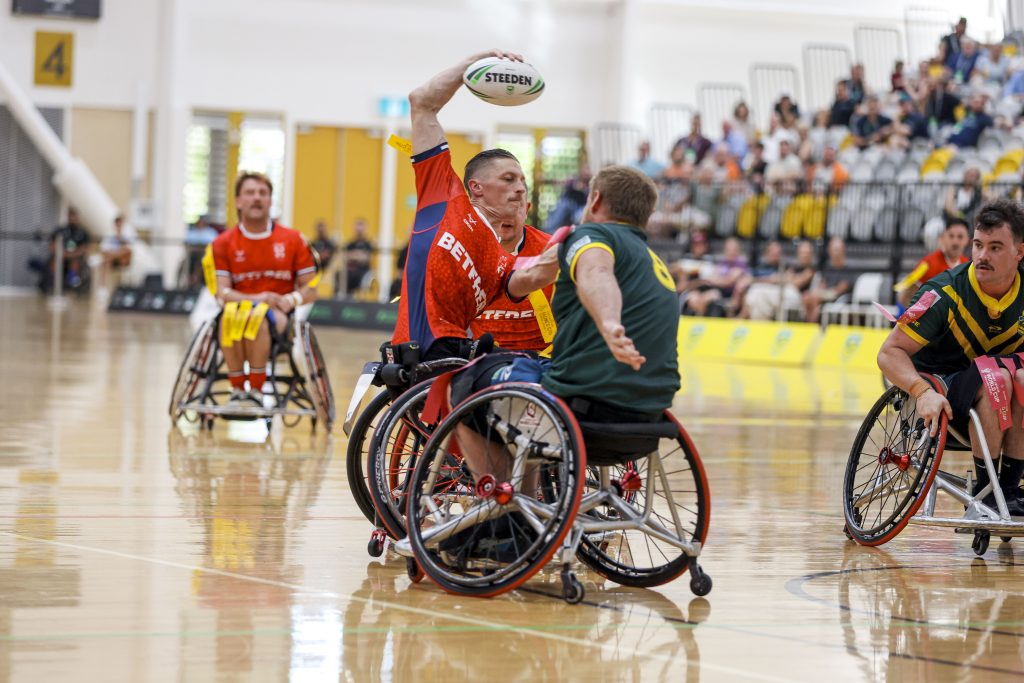
Expert-Led Development
The amendments were developed by a highly experienced advisory group, chaired by Ollie Cruickshank, and featuring international players, referees, and administrators from across the global game. They comprised Brad Grove (APRL – International Player), Steve Hewson (ARLC), Lewis King (ERL – International Player) Cyril Torres (FFRXIII), Martin Coyd OBE (RFL), Matt Ball (IRL – International Referee) and David Butler (IRL).
This collaborative approach ensures the Laws reflect real-world gameplay, athlete experience, and officiating standards at the highest level.
Brad Grove commented on his role and the intent of the changes.
“My role within the advisory group is to represent players in the Australian region, particularly athletes with disabilities. A big focus for the group has been making sure the laws strike the right balance between inclusion and fairness, so everyone has the opportunity to compete on an even footing.”
Supporting Global Growth
The international Laws apply across all levels of Wheelchair Rugby League, from grassroots participation to elite competition. National federations will soon receive additional guidance and resources to support the rollout and consistent application of the updated rules.
With the 2026 Wheelchair Rugby League World Cup on the horizon, these changes position the sport for its next phase of growth — delivering a faster, fairer, and more dynamic game for players and fans alike.
Australian Wheelaroos Head Coach, Brett Clark, welcomed the changes and said they will have a noticeable impact on the speed and integrity of the game.
“The changes will most certainly speed up play and create a more dynamic contest, particularly around the ruck and defensive line. it will prevent defenders from slowing the game artificially, which is a good thing. It also places greater emphasis on discipline and decision-making for both attackers and defenders, which is a positive step for the game internationally.
With seven months until the World Cup kicks off on home soil, we’ve got a valuable window to embed these changes into our training and preparation. It’s an exciting opportunity to evolve our style and ensure we’re performing at our best when it matters most.”
Interview with Zac Schumacher
We spoke with Australian Wheelaroo, Zac Schumacher on the rule changes.
Q1. What do these rule changes mean for players?
“These changes are really about accountability, safety, and skill execution. For players, it means you’ve got to be cleaner and more disciplined in everything you do — whether that’s your tag removal, your ball control, or your decision-making under pressure.
From a performance point of view, it raises the standard. You can’t rely on slowing the game down defensively anymore, and you can’t manipulate contact as a ball carrier. The best players will be the ones who adapt quickly, play fast, and execute their roles with precision.”
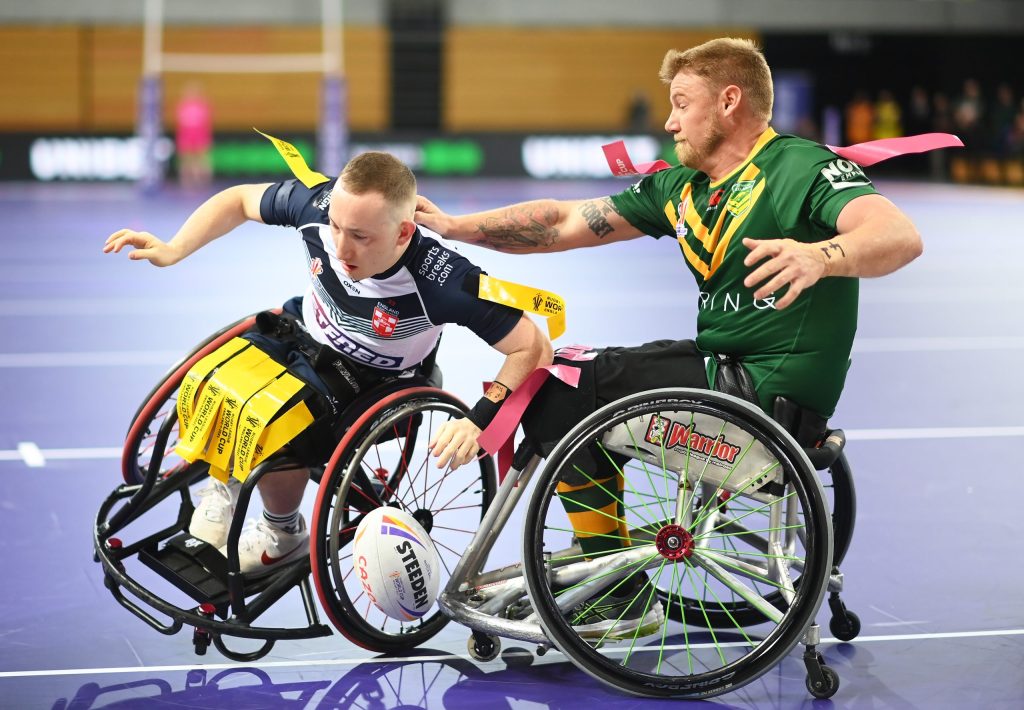
Photo by Alex Davidson/Getty Images for RLWC
Q2. What do you think will be the impact on the game itself?
“I think fans will notice a quicker, more open game. Removing the ability to delay tackles will naturally speed things up, and that creates more space, more fatigue, and more opportunity.
At the same time, the foul play interpretations around trapping and voluntary tackles clean up some of the grey areas, so what you’ll see is a fairer contest. The physicality will still be there — it’s part of Wheelchair Rugby League — but it’ll be more controlled and skill-driven rather than tactical slowing or manipulation.
Overall, it’s a positive shift toward a faster, more entertaining product.”
Q3. How will these changes affect the Australian Wheelaroos style of game?
“From an Australian point of view, these changes really suit the way we like to play. We’ve always prided ourselves on being fast, direct, and high intensity, so a quicker game plays right into our strengths.
I think the teams that will need to adapt the most are England and France. They’ve traditionally been very structured and tactical, sometimes slowing the game down to control momentum. With these changes, that becomes a lot harder to do.
So, for us, it’s less about changing our style, and more about refining it — playing even faster, staying disciplined, and taking advantage of the increased tempo. It’s a good opportunity for Australia to really set the benchmark.”
Q4. What are your thoughts on the 9th Player?
“The introduction of the 9th player is an interesting one, but at this stage we’ll wait for further clarification around exactly when and how it can be used.
Once those guidelines are clear, it’ll become a really valuable tool for managing player welfare and maintaining the quality of the game. But like any new rule, it’s important everyone has a consistent understanding before teams start building it into their strategy.”
Q5. How will the extended half-time break impact teams in the World Cup?
“The extension of half-time to ten minutes is a really positive move. It gives players more time to recover, reset, and make tactical adjustments, which ultimately lifts the quality of the second half.
In a high-intensity sport like Wheelchair Rugby League, that extra time can make a big difference — not just for performance, but also for player welfare.”
Rugby League World Cup
The Rugby League World Cup countdown is now on with the Australian Wheelaroos’ first game scheduled on 31st October in Wollongong.
Grab your tickets here – ticketmaster.com.au/rlwc2026
Comments are closed.